Hard landscaping in Lambeth
If you are planning a garden, courtyard, frontage, or outdoor living area in South London, hard landscaping in Lambeth can completely change how you use your space. From neat paving and practical pathways to retaining walls, steps, edging, and smart seating areas, the right hard landscaping features give a property structure, durability, and everyday ease. In a borough where outdoor space can range from compact Victorian back gardens to communal areas, rooftop terraces, and commercial forecourts, well-planned landscaping is not just about looks. It is about making the space work properly for the way you live or work.
Homeowners, landlords, housing managers, and business owners in Lambeth often need outdoor areas that are attractive and resilient. A patio should drain well after heavy rain. A driveway or access route needs to withstand regular use. A courtyard should be usable without constant maintenance. When hard landscaping is designed around the local environment, it can improve kerb appeal, reduce muddy or uneven areas, and make everyday maintenance much easier. If you are thinking about upgrading your property, requesting a quote is a sensible first step.
Because Lambeth includes a wide mix of property types and street layouts, local knowledge really matters. Narrow access, terraced homes, restricted parking, shared boundaries, and busy roads can all affect how a job is planned and delivered. A local team that understands these practicalities can advise on materials, access, phasing, and finish options that suit the space without unnecessary disruption. Contact us today to discuss the kind of finish you want and what is realistic for your property.
What hard landscaping includes
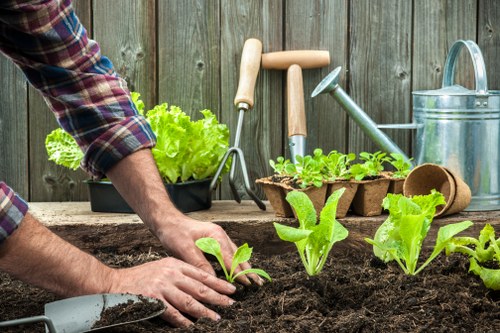
Hard landscaping refers to the built, structural elements of an outdoor space. These are the features that shape the area, provide access, and create usable zones. Unlike soft landscaping, which focuses on planting and turf, hard landscaping uses durable materials such as stone, concrete, brick, timber, gravel, and porcelain to define the layout and improve function. In practical terms, this is the backbone of many successful gardens and external spaces.
In Lambeth, hard landscaping services are often chosen to solve a mixture of design and everyday use issues. A family garden may need level paving and safe steps. A rental property may need low-maintenance surfaces. A café or office frontage may need a neat entrance area that can cope with regular footfall. The right solution depends on the property, the available access, and how the space is meant to be used throughout the year.
Typical hard landscaping work can include a mix of the following:
- Patios and paved seating areas
- Paths and access routes
- Driveways and forecourts
- Steps and level changes
- Retaining walls and raised beds
- Edging, kerbing, and borders
- Gravel areas and decorative stone
- Sleepers and timber features
- Drainage solutions and ground preparation
- Outdoor storage bases and utility areas
Choosing the right mix of these elements is important because the success of the finished space depends on more than the visible surface. Good ground preparation, sensible falls for drainage, strong sub-bases, and suitable materials all affect how long the work lasts and how easy it is to live with. A patio that looks great on day one but sinks, pools water, or becomes slippery will soon become frustrating. That is why proper workmanship and planning are essential from the start.
For many local customers, the aim is to create a space that feels finished and functional without becoming high maintenance. That may mean a simple paved terrace, a modern gravel garden with clean edges, or a durable outdoor entertaining zone with integrated steps and boundaries. Book your service now if you want to turn an awkward outdoor area into something practical and attractive.
Another important point is balance. Hard landscaping should support the architecture of the property rather than compete with it. In Lambeth, that might mean respecting period brickwork, matching the character of a terrace, or creating a tidy modern finish for a newer apartment block. Good design looks intentional, not improvised.
Why hard landscaping matters in Lambeth
Lambeth has a distinctive mix of homes and commercial spaces, from period terraces and converted flats to estates, mews-style layouts, and busy high street premises. Outdoor spaces here can be compact, exposed, shared, or irregularly shaped. That means hard landscaping has to do real work: improving access, managing water, creating usable zones, and fitting neatly into limited space.
Local weather and urban conditions also play their part. Heavy rainfall can expose poor drainage. Busy streets can lead to dirt and wear on entrances. Older gardens may have uneven levels or neglected surfaces. A well-planned hard landscaping project can help solve these issues while giving the property a much better first impression. In a borough where space is valuable, every square metre should serve a purpose.
There are also practical reasons to choose a local team for hard landscaping in Lambeth. Local crews are more likely to understand access restrictions, parking realities, neighbouring properties, and the sorts of materials that suit local homes. They can plan deliveries and work phases more sensibly and adapt to the site conditions they are likely to encounter in streets around Brixton, Clapham, Streatham Hill, Kennington, Stockwell, Waterloo, and nearby parts of South London.
Suitable projects for homes and businesses
Hard landscaping is not only for large gardens. It is equally valuable for small outdoor areas where tidy structure and durability make the biggest difference. Whether you own a house, manage a block, or run a business with external space, the right works can improve safety, appearance, and day-to-day convenience.
Residential projects
For homeowners, common requests include patios for dining, paths for better movement through the garden, sleeper edges to define beds, and retaining features to deal with sloping ground. Many Lambeth homes also benefit from carefully designed front gardens or entrance areas that make the property feel more welcoming and reduce maintenance. Where gardens are narrow or long, a simple layout can make the area feel much more usable.
Commercial and communal projects
For commercial customers, hard landscaping can improve customer access, create a professional entrance, and make outdoor areas easier to keep clean. Housing associations, landlords, schools, nurseries, offices, and hospitality businesses often need robust surfaces and clear boundaries. Decorative appearance matters, but so does the ability to handle foot traffic, bins, deliveries, and routine maintenance. In these settings, reliability and thoughtful planning are especially important.
Common reasons people enquire
Some customers want to replace tired or uneven paving. Others need to improve drainage after water pooling or soil washout. Some want to make a garden safer for children or older residents. Others need a finished outdoor area for entertaining, staff breaks, storage, or customer use. Whatever the reason, a site visit and practical discussion usually help shape the best solution.
Popular hard landscaping services

There are many ways to improve an outdoor area, and the best result usually comes from combining several elements that work together. Below are some of the most requested hard landscaping features for Lambeth properties.
Patios and paved areas
A patio creates a stable, low-maintenance surface for seating, eating, or relaxing. Paving can be designed in a modern or traditional style depending on the property. Choices may include natural stone, concrete slabs, porcelain paving, or mixed finishes. The key is to make sure the base is properly prepared and the finish suits the intended use of the space.
Paths and walkways
Paths help connect entrances, patios, lawns, sheds, side access points, and garden features. In compact Lambeth gardens, a well-placed path can improve flow and make the whole space easier to use. For communal or commercial areas, paths also support safer movement and clearer access.
Driveways and forecourts
Where space allows, a driveway or forecourt needs to combine strength, drainage, and a smart appearance. Materials should be selected with traffic levels in mind. Good edging and a stable sub-base are crucial if the surface is going to stand up to daily use.
Steps and level changes
Changes in height need to be handled carefully for both appearance and practicality. Well-built steps can transform access to split-level gardens, raised entrances, or terraces. They should feel comfortable to use and match the overall design.
Retaining walls and raised beds
Retaining walls can hold back soil, manage level differences, or create a more structured layout. Raised beds are useful for planting, defining areas, and making maintenance easier. In the right setting, they add both form and function.
Many projects also include gravel, decorative chippings, timber sleepers, edging, and drainage details. These smaller features often make a big difference to the finished result. A neat border, for example, can stop paving from looking unfinished. Proper drainage can protect the whole area from standing water and soft ground. Even a simple choice like the right edge detail can lift the appearance of the whole job.
It is also worth noting that a well-designed hard landscaping scheme can reduce maintenance needs in the long term. That is especially attractive for landlords, busy households, and businesses that want a good-looking outdoor area without constant upkeep. Request a free quote if you want to see what is possible for your space.
For some properties, the work may be phased. A customer might start with the most urgent problem, such as drainage or unsafe paving, then add decorative and functional features later. A flexible local contractor can help you plan the work in a sensible order.
Materials commonly used

The materials chosen for hard landscaping have a major effect on both appearance and performance. Different properties and budgets may call for different approaches, and the right choice depends on the style of the building, the amount of use, and how much upkeep you are comfortable with.
Natural stone
Natural stone is a popular option where a timeless, high-quality finish is desired. It suits many period and character properties in Lambeth and can look elegant in gardens, courtyards, and entrance areas. It may need sealing or periodic cleaning depending on the type used and the exposure of the site.
Porcelain paving
Porcelain is often chosen for a sleek, contemporary finish. It can be a strong option for patios and terraces because it is available in many styles and tends to be straightforward to keep clean. It is important that the base and installation method are suitable, especially where frost, drainage, and slip resistance matter.
Concrete paving
Concrete slabs remain a practical and versatile choice. They are available in many sizes and finishes, which makes them useful for paths, patios, and budget-conscious projects. When laid well, they can be durable and attractive, especially in modern layouts.
Brick and clay pavers
Brick and clay finishes can work especially well with traditional Lambeth properties. They help create a warm, classic look and can be used for edging, paths, and smaller paved areas. Their character makes them a strong choice where style matters as much as utility.
Other materials
Gravel, aggregates, timber sleepers, setts, and decorative edging can all play a supporting role. These materials are often used to define borders, improve drainage, or add contrast and texture. The best results usually come from combining materials in a way that is simple, balanced, and appropriate to the building.
Hard landscaping in Lambeth should always be matched to real site conditions. A shaded courtyard may need different materials from an open rear garden. A rental property may need something robust and low maintenance, while a family garden might prioritise comfort and play space. Local advice can help you avoid choosing materials that look good on paper but are awkward to maintain in practice.
It is also important to think about drainage and surface falls when choosing materials. Some finishes are better suited to wet conditions or narrow spaces than others. This is one reason why a site survey is useful before work begins, especially in older properties where ground conditions are not always obvious.
How the service usually works
A good hard landscaping project should feel organised from the beginning. Most customers want a straightforward process, clear communication, and a result that matches what was discussed. While every property is different, the general steps are usually similar.
- Initial discussion – You explain what you want to improve, what problems you are facing, and how you hope to use the space.
- Site visit and assessment – The layout, access, levels, drainage, and existing surfaces are reviewed so the work can be planned properly.
- Design and material choices – Options are discussed based on style, practicality, and the constraints of the site.
- Preparation – Existing materials may need to be removed, ground levels adjusted, or drainage and sub-bases installed.
- Construction and installation – The chosen features are built with care, using suitable methods for the space.
- Finishing touches – Edging, jointing, cleaning, and final checks help ensure the area looks neat and performs properly.
The exact order and timeline will depend on the project size and the site conditions. A small patio may be completed relatively quickly, while a larger or more complex garden transformation may need more preparation and careful phasing. The aim is always to create a strong, tidy finish that is built to last.
Customers often find it helpful to ask about access, waste removal, and how the site will be kept tidy during the project. In Lambeth, where outdoor access can be tight and parking limited, these details can make a big difference to the smooth running of the job.
Preparation checklist for homeowners and property managers
Before hard landscaping work starts, a little preparation can help the project run more smoothly. You do not need to handle the technical side, but having the area ready and knowing what to expect can reduce delays and confusion.
- Clear away loose garden furniture, pots, toys, and stored items if possible
- Make a note of shared access points, side gates, and any locked areas
- Check whether neighbours need to be informed if work may affect shared boundaries
- Think about where waste, materials, and deliveries can be placed safely
- Consider how you want to use the finished space on a daily basis
- Identify any drainage issues, uneven ground, or problem areas you want solved
- Tell the contractor about pets, children, or access needs that may affect site setup
If you are a landlord or managing agent, it is also useful to think about future maintenance. The most practical solutions are often those that are easy to inspect, clean, and keep in good condition. In communal spaces, durability and safe access may be more important than decorative detail.
For homes with limited outdoor access, it is sensible to discuss delivery routes and storage before the work begins. Lambeth properties often have narrow entrances or shared walkways, so planning ahead can help the project move without unnecessary disruption.
Pricing factors and what affects the quote
Customers often want to know what shapes the cost of hard landscaping, and while exact figures vary, there are clear factors that influence the final quote. A reliable contractor should explain these in plain language so you can compare options sensibly.
- Size of the area – Larger spaces naturally require more material and labour
- Existing condition – Removal of old concrete, paving, roots, or debris may add work
- Ground levels – Sloping or uneven sites may need extra preparation and building work
- Material choice – Natural stone, porcelain, and specialist finishes can cost more than standard options
- Drainage requirements – Additional drainage or soakaway solutions may be needed
- Access and parking – Limited access can affect how materials are brought in and waste removed
- Design complexity – Steps, curves, walls, and mixed materials usually require more time
- Site constraints – Shared boundaries, tree roots, or tight working areas can influence the approach
While budget matters, it is often smarter to focus on the work that needs doing properly than to choose a cheap solution that may not last. A strong base, correct drainage, and careful installation can save trouble later. If you are comparing options, ask for a clear explanation of what is included so you can make an informed choice.
Contact us today if you would like a practical discussion about your space and the kind of finish you are aiming for. A well-planned proposal should help you understand the scope, the likely stages, and the best material choices for your property.
Why choose a local company for hard landscaping in Lambeth
Choosing a local service brings real advantages. A company familiar with Lambeth is more likely to understand the types of properties, the realities of local streets, and the practical issues that can slow a job down if they are not planned for properly. That familiarity can make a noticeable difference to both efficiency and results.
Local knowledge is particularly useful where access is limited. Many Lambeth homes have narrow side returns, small front forecourts, or rear gardens that can only be reached through the property. Commercial sites can have loading restrictions or shared use areas. A local team can factor these constraints into the work plan from the outset.
It also helps to work with a contractor who understands the character of the area. From Brixton and Herne Hill to Clapham, Stockwell, Oval, Vauxhall, and Waterloo, properties vary widely. A good contractor should be able to suggest styles that fit period terraces, apartment courtyards, mixed-use developments, and modern extensions alike.
Benefits local customers usually value
- Better understanding of typical property layouts and access issues
- More practical advice on materials and finishes for local conditions
- Flexible planning around delivery, parking, and neighbour considerations
- Solutions suited to both residential and commercial premises
- A more personal, site-specific approach rather than a one-size-fits-all finish
Areas covered across Lambeth
Hard landscaping services are relevant across the borough and surrounding South London neighbourhoods. Whether the property is a family home, a rental flat with a courtyard, a commercial frontage, or a communal outside area, the same principles apply: good planning, solid construction, and a finish that suits the site.
Typical areas customers may enquire from include Brixton, Clapham, Stockwell, Oval, Kennington, Herne Hill, Waterloo, Vauxhall, Streatham Hill, West Norwood, and nearby parts of Southwark and Wandsworth. If your property sits close to one of these areas, local experience can help shape a better result.
Even within the same neighbourhood, no two sites are identical. Some gardens are long and narrow. Some front areas are almost entirely paved. Some commercial premises need a balance of access and presentation. That is why a local site visit is so useful: it allows the work to be planned around the actual conditions rather than assumptions.
Frequently asked questions
What is the difference between hard landscaping and soft landscaping?
Hard landscaping covers the built, structural parts of an outdoor area, such as paving, walls, steps, paths, and edging. Soft landscaping refers to planting, turf, shrubs, and other living elements. Many projects combine both for the best overall result.
Can hard landscaping help with drainage problems?
Yes, it can. Properly built patios, paths, and surfaced areas can be laid with the correct falls to move water away. In some cases, additional drainage features may be needed, especially where the site has pooling water or poor ground conditions.
Is hard landscaping suitable for small gardens?
Very much so. Small Lambeth gardens can benefit hugely from thoughtful hard landscaping because it helps create structure and usability. A compact patio, a neat path, or a built-in seating area can make a small space feel much more practical.
Do you work on both homes and commercial properties?
Yes. Hard landscaping is suitable for residential gardens, rental properties, communal spaces, offices, hospitality sites, and other commercial premises. The details are adjusted to suit the use of the space and the level of wear it will experience.
What should I think about before booking?
It helps to know how you want to use the area, what problems need solving, and whether there are any access restrictions. If you can share photos or discuss the site layout in advance, that can make the first conversation more productive.
How do I know which materials are right for my property?
The best material depends on the style of the building, the amount of foot traffic, the maintenance you want to do, and the finish you like. A local contractor can talk you through the pros and cons of options such as stone, porcelain, concrete, brick, and gravel.
Can the work be done in phases?
Yes. Many customers choose to improve the most urgent parts first, such as drainage, access, or unsafe paving, then add more decorative features later. Phasing can be a sensible approach for larger or more complex projects.
What to expect from a good local service
A strong hard landscaping service should feel practical, transparent, and tailored to your site. You should expect clear communication, a realistic discussion about what the area needs, and workmanship that is suited to the property rather than rushed or generic. In a borough like Lambeth, where space can be limited and the variety of sites is high, experience and careful planning matter just as much as the finished design.
Good service also means attention to the details that customers may not see immediately. That includes stable foundations, correct levels, clean edges, and sensible drainage planning. These are the parts that help a patio remain firm, a path stay safe, and a wall continue doing its job for years to come.
If you are ready to improve an outdoor space, request a free quote and discuss the options that fit your property, your goals, and your budget priorities. Whether you are updating a garden in Brixton, improving a frontage in Clapham, or creating a more usable courtyard near Waterloo, the right hard landscaping can make the space feel far more valuable and enjoyable.
Ready to improve your outdoor space?
If you want a smarter, more usable, and more durable exterior area, now is the right time to take the next step. From simple paving replacements to full layout changes, hard landscaping in Lambeth can add structure and long-term value to many types of property. A local team can help you decide what is practical, what will last, and what will look right for the building.
Book your service now to start planning your project and move one step closer to an outdoor space that works better every day. Whether the aim is family use, property presentation, safer access, or easier maintenance, the right hard landscaping solution can make a lasting difference.