Recycling and Sustainability at Landscaping Lambeth
 At Landscaping Lambeth, sustainability is not treated as an extra service; it is built into how we plan, work, and clear every site. Our approach to landscaping recycling in Lambeth focuses on reducing waste at source, separating materials carefully, and making sure as much as possible is recovered for reuse or reprocessing rather than sent to landfill. We aim for a minimum 85% recycling and recovery rate across our green waste and project materials, with the long-term ambition of reaching 90% where site conditions and material streams allow. This includes organic waste, soil, stone, timber, plastics, metals, and packaging from project deliveries.
Across the borough, sustainability means working with the realities of urban waste systems. Lambeth and neighbouring inner-London areas have clear expectations around separating green waste from general rubbish, which helps us keep cuttings, branches, turf, and plant matter out of residual waste bins. We mirror that borough-wide approach by sorting materials on-site wherever possible, then sending each stream to the right route for recycling, composting, or reuse. This method supports cleaner collections, fewer contamination issues, and better overall recycling outcomes.
We also place importance on responsible disposal for landscaping by-products that are not naturally biodegradable. Soil with roots and rubble is assessed for reuse potential, timber offcuts are checked for salvage, and metals are segregated for specialist recovery. For our Landscaping Lambeth recycling process, the aim is simple: keep materials moving into the most sustainable channel available, with every journey and transfer documented to support accountability and resource efficiency.
One of the key parts of our sustainability model is using local transfer stations and waste facilities to reduce unnecessary travel. By choosing transfer stations within or close to South London, we lower mileage and help cut emissions associated with haulage. This is especially important in dense urban work where repeated collections can quickly add up. Our teams look for transfer options that can handle mixed green waste, inert materials, and segregated recyclables in accordance with local processing standards.
In practical terms, that means cuttings from hedge trimming, grass, shrubs, and seasonal clearances may be taken to nearby facilities that process organic waste into compost or soil improver. Clean wood can be directed into specialist recycling, while stone and hardcore from landscaping changes may be routed for aggregate recovery. These routes support a broader recycling in Lambeth strategy that values local processing and lower-carbon logistics over long-distance disposal.
 We also work with charities and community organisations where suitable items can be given a second life. Planters, garden furniture, healthy surplus plants, and usable timber can often be passed on rather than discarded. Partnerships with charities support community gardening, habitat projects, and local greening efforts, which is especially valuable in built-up boroughs where outdoor space is at a premium. In many cases, what might once have been treated as waste can become a practical resource for schools, community plots, or social enterprises.
Midway through a project, sustainability often comes down to the small choices that shape the whole job. 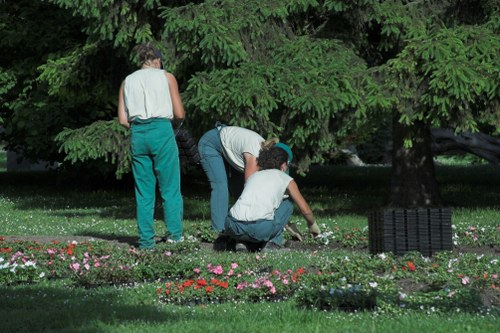 We use low-carbon vans and efficient transport scheduling to reduce the environmental footprint of daily operations. These vehicles are selected for lower emissions, better fuel economy, and suitability for city routes, where frequent stops and short journeys are common. Using modern vans also helps reduce local air pollution, which is a meaningful consideration in London neighbourhoods with heavy traffic and residential density.
Our low-emission fleet supports the wider commitment to green landscaping in Lambeth. Rather than moving materials back and forth unnecessarily, we plan work sequences so collection, sorting, and transfer happen in the fewest trips possible. This matters for projects involving pruning, turf replacement, soft landscaping, or larger garden clearances, where transport efficiency can make a significant difference to carbon output over the course of a season.
We also apply reuse logic wherever it is safe and appropriate. Healthy soil can sometimes be screened and reused on another project, woodchip can be repurposed as mulch, and stones may be incorporated into retaining features or drainage zones. This keeps useful materials in circulation and supports a circular approach to landscape waste recycling. It also aligns with the borough’s broader environmental direction, where waste reduction and material separation are increasingly central to everyday operations.
Another important part of our sustainability work is careful sorting before anything leaves site. We separate green waste, clean timber, soil, plastic pots, metal fixings, and general rubbish so each fraction can be handled correctly. This reflects the wider approach seen across local boroughs, where waste separation helps improve recycling quality and avoids contamination. For landscaping projects, this can mean keeping compostable plant material apart from bags, labels, and mixed debris so the organic stream remains suitable for processing.
We pay attention to the types of recycling activity most relevant to Lambeth’s urban landscape. That includes composting hedge trimmings, chipping branches for mulch, recovering topsoil where viable, and sending scrap metal from fixtures and fittings into metal recycling streams. Landscaping Lambeth also supports the reuse of terracotta, edging, and selected decorative materials when they are intact and safe to repurpose. These are modest steps individually, but together they reduce waste volumes and support a more resource-conscious local environment.
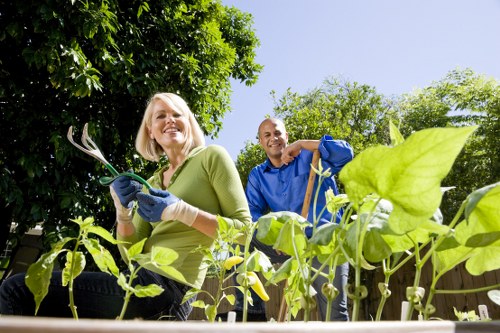 Before each disposal run, our teams review which loads can be reduced, which can be reused, and which need specialist handling. Hazardous or contaminated materials are kept separate and managed according to the correct route, while non-hazardous recyclable waste is moved toward recovery. This disciplined process is part of our commitment to sustainable landscaping in Lambeth, where practical on-the-ground decisions support better environmental outcomes across the borough.
 In the final stage of our sustainability process, we look at what the project has achieved beyond the visible landscaping result. A well-managed site should leave behind healthier planting, cleaner waste streams, and fewer emissions from transport and disposal. Our recycling target encourages continuous improvement, while our use of local transfer stations and low-carbon vans keeps the environmental cost of each job as low as possible.
Partnerships with charities and reuse organisations add another layer of value, turning surplus materials into useful resources for community-focused projects. At the same time, our attention to borough-style waste separation helps ensure that green waste, soil, wood, and recyclables are dealt with in the most responsible way. The result is a more thoughtful model of recycling in Lambeth, one that supports both the appearance of outdoor spaces and the sustainability of the borough itself.
Landscaping Lambeth is committed to a circular, low-waste approach that balances quality work with environmental care. From compostable cuttings and reclaimed materials to efficient vehicles and local processing routes, every part of the process is designed to reduce impact and improve recovery. That is how we build greener spaces while helping protect the wider urban environment for the future.